Seven Famous Women With Hearing Loss

If you are experiencing hearing loss, you are not alone.  More than 30 million Americans over the age of 12 have hearing loss in both ears.  Here are a few famous women that are known to have hearing loss.

Marlee Matlin

A celebrated actress who lost her hearing to a childhood illness, Matlin has been a vocal advocate for the deaf for over 30 years and is one of the most recognizable faces of hearing loss. She won an Academy Award at age 21 for her very first film role, making her both the youngest Best Actress winner and the only deaf person to receive the award.


Evelyn Glennie

Living with a hearing loss is challenging for anyone, but it can be especially frustrating for musicians. Dame Evelyn is a testament to the power of determination. Profoundly deaf since the age of 12, this brilliant percussionist went on to win not just one but two Grammy awards and has received 15 honorary doctorates from various universities. Her 2003 TED Talk, “How to Truly Listen,” describes her unique approach to “hearing” sounds with her entire body.


Gertrude Ederle

Being the first woman to swim across the English Channel is an incredible feat. Ederle never even considered letting hearing loss slow her down. In 1926, after a swim that clocked at 14 hours and 34 minutes, she emerged from the water at Kingsdown, England, having broken the record set by the last man to swim the channel. Ederle was crowned “Queen of the Waves” and went on to be featured in both the International Swimming Hall of Fame and the National Women’s Hall of Fame.


Regina Olson Hughes

As the first deaf artist to have a solo exhibition at the Smithsonian Museum in Washington, D.C., Hughes’ achievements echo through the halls of natural science. After graduating from the only postdoctoral program available to deaf students in 1920, she became a botanical illustrator for the Smithsonian Institution, the U.S. Department of Agriculture, and the Agricultural Research Service. Additionally, Hughes retained her speaking skills and was fluent in four languages. Two plants are named after her: Billbergia reginae, a type of bromeliad, and Hughesia reginae, a Peruvian flower similar to a daisy.


Jodie Foster

Ordinarily a very private person, this Academy Award-winning actress has been spotted wearing a hearing aid on the red carpet and suffers from bouts of vertigo, which is a condition that often accompanies hearing loss. Foster is one of the most famous and decorated actresses alive, with multiple awards to her name, including the prestigious Cecil B. DeMille Award. She is also a vocal advocate for LGBTQ rights.

Millie Bobby Brown

One of the most recognizable stars of the hit series Stranger Things, Brown is already making headlines as the youngest person to ever be nominated for an Emmy award. She is completely deaf in one ear and is quickly becoming a positive role model for deaf youth around the world, saying of her recent entry into music: “I just started to sing, and if I sound bad, I don’t care, because I’m just doing what I love. You don’t have to be good at singing. You don’t have to be good at dancing or acting. If you like to do it, if you genuinely enjoy doing it, then do it.” With a can-do attitude like that, the sky is the limit!


Helen Keller

Helen Keller, who was blind and deaf, stunned the world by learning how to read, write, and speak. She is arguably the most famous and recognized deaf person in history. After mastering the use of language, she became a prolific scholar and author, attended Radcliffe College at Harvard University, published two dozen books, and joined the fight for women’s suffrage. Keller traveled the world as a public speaker passionate about the rights of the disabled. In 1964, she was awarded the Presidential Medal of Freedom – one of the highest honors in the United States. Her life and work are towering examples of the power of human perseverance and what is possible when a woman fully believes in herself and refuses to give up.


Hearing loss is more common that most people realize.  If you or someone you love have hearing loss, Purchase Ear Technology in Paducah is here to help.  Tim Harmon and his experienced staff will help you determine your level of hearing loss hand come up with the best plan to help you hear again.  We are conveniently located at 2008 Broadway St in Paducah, KY.  To schedule an appointment, give us a call at 270-558-3996.  At Purchase Ear Technology, you are more than a patient.  You are FAMILY!


Hearing Aids vs Hearing Amplifiers

Hearing loss is one of the most common health issues in the U.S – close to 37.5 million adult Americans are currently experiencing some form of hearing loss. In terms of treatment, hearing aids are the ideal method. However, the cost of hearing aids can be an issue for some. Because of this, people often seek out more budget-friendly alternatives to hearing aids like hearing amplifiers.

Although these cheaper hearing devices may be a solution for people with minor hearing challenges, they are not an effective form of treatment for hard-of-hearing individuals and can even be harmful. It is vital to do your research and consult a medical professional before committing to a treatment decision for your hearing loss.

Are you considering buying a hearing amplifier? We want to bring you the facts and help explain why hearing amplification devices should be avoided as a form of treatment.

What is the difference between a hearing aid and a hearing amplifier?

Hearing Amplifiers

Do ear amplifiers really work?

Hearing amplifiers are designed to help people with normal hearing hear far away or quiet sounds. So, yes. Hearing amplifiers work when they are used for their intended purpose. However, they should never be used as a form of treatment for hearing loss.

Hearing amplifiers magnify all sounds within a given radius. Meaning all sounds become louder when using an amplifier, not just the sounds you have trouble hearing. Therefore, the root of the problem persists when people use hearing amplifiers to treat their hearing loss.  In comparison, hearing aids are specifically made for those with hearing loss. Hearing aids are also specially designed to optimize the sounds you have difficulty hearing instead of amplifying all sounds in general.

Another problem is that no consultation is needed to purchase and use a hearing amplifier. This means you miss out on the guidance of a medical expert if you decide to buy a hearing amplifier over the counter. An audiogram conducted by a healthcare professional is necessary to diagnose hearing loss properly. Failing to consult a professional can further deteriorate your hearing and could mean the difference between mild and severe hearing loss.

Do hearing amplifiers damage your hearing?

Yes, using a hearing amplifier as a treatment for hearing loss can cause damage in the long run. Hearing amplifiers amplify all sounds within a given radius, even those you don’t want to hear. Because the manufacturing process of these devices is not regulated like hearing aids, hearing amplifiers can deliver sound at a level that causes further damage to your hearing. In addition, the design of the ear insert can often push earwax deeper into the ear canal, creating impacted wax that needs to be medically removed. Lastly, since many people purchase hearing amplification devices without the advice of a medical specialist, they often miss out on vital information that could prevent further damage to their hearing.

Hearing Aids

First things first, let’s learn about the basic types of hearing aids and why they are considered to be the “gold standard” for treating hearing loss.

Types of hearing aid

There are many kinds of hearing aids used to correct varying levels of hearing impairment. To help give you a general frame of reference, we’ll list the two basic styles here. Depending on your specific treatment plan, a different variation of these models might be prescribed to you.

In-the-ear or ITE hearing aid

These aids are worn in the ear canal and are custom-fit using an impression that your hearing care professional takes during your hearing aid consultation.

Behind-the-ear or BTE hearing aid

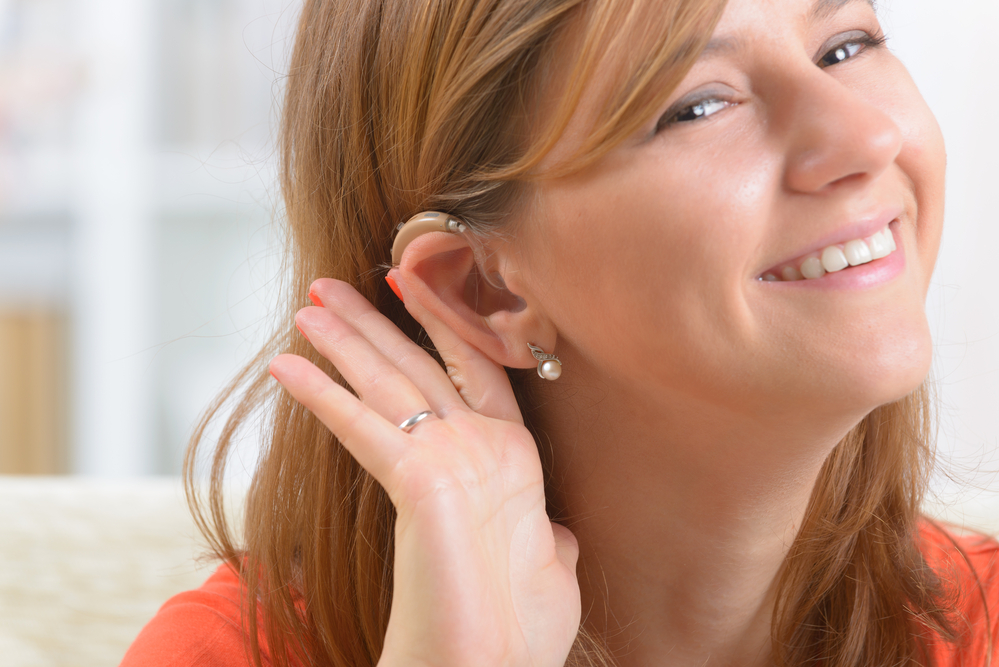
These aids sit behind or on top of the outer ear with tubing that directs sound into the ear canal using a custom earmold that doesn’t block the entire ear canal opening.

Why are hearing aids the best treatment option?

Hearing aids are Class 1 medical devices regulated by the FDA, certifying them as reliable treatment. In addition, hearing aids are only administered by hearing care professionals, which ensures that the device is fitted correctly and is functioning efficiently.

Hearing loss is experienced differently by everyone. Therefore, any hearing treatment needs to be designed so that sound is processed and fine-tuned to sufficiently treat your unique impairment. Because of this, there is no “one-size-fits-all” approach to treatment. Working with a hearing health professional guarantees that your hearing aid and treatment plan caters to your specific needs and lifestyle.

Ultimately, even basic hearing aid designs involve highly-sophisticated technology with sound processing strategies that have been researched and tested to give people with hearing loss the best quality of sound.

Got questions? We’d love to hear from you!

To receive the best care possible, you need to consult a hearing professional, like Tim Harmon at Purchase Ear Technology in Paducah, who can provide you with legitimate medical technology. Before you purchase any treatment for your hearing loss, we recommend consulting with a reputable hearing care provider who can help you find the perfect hearing solution for you.

If you think you are experiencing some level of hearing loss, give Purchase Ear Technology in Paducah a call today at (270) 558-3996.  We are conveniently located at 2008 Broadway St in Paducah, KY.  At Purchase Ear Technology, you are more than a patient.  YOU ARE FAMILY!

More posts that may be of interest to you:

 

What Are The Best Hearing Aids For Me?

Adjusting To New Hearing Aids At Work

5 Questions We Will Answer At Purchase Ear Technology In Paducah

Traveling? Tips For Better Hearing On The Go

Hearing devices help you communicate your best no matter where you are, so it’s especially important to lean into them when traveling. Make those unforgettable on-the-go moments even more special with these helpful reminders.

1. Get to Know Your Hearing Devices

Your hearing aids likely come chock-full of features — some you might not have fully explored just yet. Options may include streaming, geotagging, and controlling the devices through your compatible smartphone or tablet. Take time now to get to truly know your hearing technology for a better experience on the road.

2. Pack Extra Batteries

Keeping your hearing aids powered is even easier when you bring an extra supply of batteries — just in case. And be sure to remove batteries from your hearing devices when they’re not in use. If you’re using rechargeable hearing aids, it’s a good idea to have an extra charger on hand specifically for travel.

3. Remember Your Storage Container

Just like at home, your hearing devices need proper storage when not in use. In order to prevent damage or misplacement, protect them from moisture, small pets, and kiddos. Dehumidifiers made especially for the devices will not only dry and sanitize them; they’ll do double duty as convenient storage containers.

4. Change the Wax Guard

Your hearing device’s wax guard serves as an important protection against a damaging buildup of wax, skin particles, and other debris. If it’s been close to a month or more since you last changed out the wax guard, take care of this easy maintenance task before you go, and pack a couple of extra guards.

5. Include a Quick-Cleaning Kit

Dust and dirt can make their way onto your hearing devices, but a small cleaning kit is just the thing. Wipe the earmold — if it’s part of your device — with a soft, dry cloth; carefully brush over the microphone and battery contacts with a soft-bristle brush; and use a wax pick to remove earwax from the earmold.

6. Add Your Bluetooth Gear

From table microphones to phone clips, TV streamers, and more, Bluetooth-enabled accessories that work with your hearing devices can go a long way toward enhancing your communication and enjoyment. Make sure they’re part of your checklist.

7. Get Yourself in the Loop

Some museums, theaters, houses of worship, and other spaces have installed hearing loops, letting visitors enjoy enhanced audio by wirelessly connecting through the T-coil setting on their hearing aids. Look for the hearing loop logo, or ask the info desk if they’re a participating venue.

8. Protect Your Hearing

A new environment can mean new or unexpected sounds — some of which may hit the danger zone of 85 decibels or higher, which can harm your hearing. Avoiding excess noise when possible and bringing quality hearing protection that softens loud sounds can help guard your hearing health while on the go.

Taking to the skies? As of this writing, it’s A-OK to bring your hearing devices through airport screening and wear them during your flight. It’s always good to check with relevant authorities in advance, however, if you’re flying out of the U.S. or Canada.

Have questions about your hearing aids or wondering if you need them?  Give Purchase Ear Technology in Paducah a call today at 270-558-3996.  Purchase Ear Technology is conveniently located at 2008 Broadway St in Paducah, KY.  At Purchase Ear Technology, you are more than a patient.  YOU ARE FAMILY!

hearing test paducah

Six Signs You Should Have Your Hearing Tested

You want to be polite when you’re talking to friends. You want your customers, colleagues, and supervisor to see that you’re completely involved when you’re at work. You frequently find yourself asking family to repeat themselves because it was easier to tune out parts of the conversation that you couldn’t hear very well.

You have to lean in a little closer when you’re on conference calls. You watch for facial hints, listen for inflection, and tune in to body language. You attempt to read people’s lips. And if none of that works, you nod in understanding as if you heard every word.

Maybe you’re in denial. You missed a lot of what was said, and you’re struggling to keep up. Life at home and tasks at work have become unnecessarily overwhelming and you are feeling aggravated and cut off due to years of cumulative hearing loss.

Some research shows that situational factors including environmental acoustics, background noise, contending signals, and situational awareness have a strong influence on the way we hear. But for people who suffer from hearing loss, these factors are made even more challenging.

Look out for these behaviors
Here are a few behaviors to help you determine whether you are, in fact, fooling yourself into thinking hearing loss isn’t impacting your professional and social relationships, or whether it’s just the acoustics in the environment:

  • Cupping your hands over your ear or leaning in close to the person who is speaking without realizing it
  • Unable to hear others talking from behind you
  • Thinking people aren’t speaking clearly when all you can hear is mumbling
  • Repeatedly having to ask people to repeat themselves
  • Asking others what you missed after pretending you heard what they were saying
  • Missing what people are saying when on phone conversations

While it may feel like this snuck up on you suddenly, more than likely your hearing loss didn’t occur overnight. Acknowledging and seeking out help for hearing loss is something that takes most individuals at least 7 years.

That means that if your hearing loss is a problem now, it has most likely been going unaddressed and untreated for some time. Begin by scheduling an appointment right away, and stop kidding yourself, hearing loss is no joke.

If you or someone you love is showing signs of hearing loss, give us a call at Purchase Ear Technology in Paducah to schedule an appointment.  Tim Harmon at his staff at Purchase Ear Technology has been helping people just like you for years.  We are conveniently located at 2008 Broadway St in Paducah, KY.  You can reach us by phone at (270) 558-3996 or CLICK HERE to contact us.  At Purchase Ear Technology, you are more than a patient.  You are FAMILY!

Hearing Aids Paducah

Five Excuses That Prevent You From Aging Well With Hearing Loss

No doubt about it, hearing loss is frustrating. It frustrates the people who have it and their loved ones, friends, and colleagues. However, annoying and more difficult communication is just one effect of hearing loss. It also creates problems for walking (poor balance) and increases the risk of falls and dementia.

Research led by Frank Lin, M.D., Ph.D. at Johns Hopkins, found mild hearing loss doubled the risk of dementia, and moderate loss tripled it. With severe hearing, people were five times more likely to develop dementia.

Can you mitigate these risks? Yes! Hearing aids reduce the risk of dementia by feeding your brain the sound stimulation it needs to function normally. And hearing aids make comfortable communication a reality once again.

You can’t run from hearing loss

Trying to disguise your hearing loss is self-defeating. Still, many people give it a shot. For instance, untreated hearing loss isolates you socially and impairs your balance, making you less steady on your feet. Both are sure signs of unsuccessful aging.

By comparison, successful aging is adapting to the health challenges you face today so you can live a healthy life in the future.

Resisting treatment for hearing loss only increases the risk of more significant brain damage, making delayed treatment less effective. As Lin and team at Johns Hopkins found,

Brain scans show us that hearing loss may contribute to a faster rate of atrophy in the brain.

To age successfully with hearing loss, don’t let the following five excuses prevent you from getting it treated.

1. My hearing’s not that bad.

Hearing aid users wait an average of ten years to get help for hearing loss. But during that long denial, communication with loved ones becomes progressively more stressful, not to mention more social isolation and brain atrophy.

Our findings emphasized just how important it is to be proactive in addressing any hearing declines over time. —Frank Lin, M.D., Ph.D.

2. Wearing hearing aids means I’m old. I’m not ready for that.

Sure, you want to hide signs of aging, but excluding yourself from conversations and activities only increases the perception that you’re older and less competent. With the help of hearing aids, you can reconnect with family and friends and be more involved, which helps your brain stay younger.

3. I don’t like the way hearing aids look.

Today’s hearing aids are small and inconspicuous — not those ugly flesh-colored monsters of yesteryear.

Even celebrities (like former President Bill Clinton and football Hall of Famer Mike Singletary) are wearing them proudly.

4. I heard that hearing aids are difficult to use.

Hearing aids require a break-in period, a time for your brain (and you) to adjust. That’s why many hearing centers offer a trial period. Finding the type and brand of hearing aids that work best for you is essential for hearing-aid success.

5. Hearing aids cost too much.

Sixty-one percent of users pay the bill themselves. But when you account for the health risks inflicted by hearing loss, hearing aids are a high-return investment in your health and future.

If you’re 60 and older

If you live in Paducah, KY or in one of the surrounding communities, schedule a hearing screening with us at Purchase Ear Technology.  Tim Harmon and his staff will help you decide if hearing aids are a good fit for you.  You can give us a call at (270) 558-3996 or CLICK HERE to contact us.  Purchase Ear Technology is conveniently located at 2008 Broadway St in Paducah KY.  At Purchase Ear Technology, you are more than a patient.  You are family!

Five Reasons To Treat Hearing Loss

Understanding How You Hear


Hearing aids paducah summer care

6 Tips For Summer Hearing Aid Care

Summertime is right around the corner and that means sunny days, warm weather and lots of time spent outside! But for those with hearing aids, summer can present some problems.

Hearing aids can be damaged when exposed to heat or moisture. Sweat and water are the two biggest enemies of hearing aids during the summer, and sharp temperature changes can cause condensation and an increased propensity to sweat. All of these are damaging to your hearing aids and may prevent them from working properly.

Damage could result in distorted or weak sound quality, reduced battery life and inconsistent functionality.

Here are some ways to keep you hearing aids safe and functional this summer.

  • Take out your hearing aids when exercising outside, if it is raining or if the weather is extremely warm.
  • At night, open the battery door to allow dry, fresh air to move through the hearing aid and relieve moisture.
  • Keep your hearing aids in a protective case and out of direct sunlight when you are not wearing them.
  • Avoid storing hearing aids in humid places such as in glove boxes, dashboards, or other environments where heat and moisture can build up.
  • Remove your hearing aids before showering, swimming or any activity in which you will or could be exposed to water.
  • Sunscreen has oils that can damage hearing aids, so apply lotions or sprays completely before putting on your hearing aids. Be sure that the sunscreen is fully rubbed in or dry before putting your hearing aids back on or the oils will seep into open seams and microphone ports or vents.

Summer should be fun not stressful. Follow our tips above for a worry-free summer that’s full of sounds and sunshine.  Have questions about how to care for your hearing aids?  Give Purchase Ear Technology a call today at (270) 558-3996, stop by our office located at 2008 Broadway, Paducah, KY or send us a message by CLICKING HERE.

tinnitus ringing ears paducah

Is There A Cure For Tinnitus?

Let’s talk about what tinnitus is, and what you can do to help manage it.

What is tinnitus?

Tinnitus is the perception of sound when no actual external noise or sound is present. It is often referred to as “ringing” in the ears.  We have even heard some people call it “head noises.” While ringing sounds are very common, many people will describe the sound they hear as buzzing, hissing, whistling, swooshing, and clicking. In some rare cases, tinnitus patients report hearing music or about 2,000 crickets all going at once!

So, is there a tinnitus cure?

Tinnitus, by itself, is not a disease. It is a symptom of something else. There are many things that can trigger tinnitus. Tinnitus can be associated with exposure to loud sounds and acoustic trauma, hearing loss, or certain drugs and medicines. In addition, roughly 200 health disorders can be associated with tinnitus.

Because tinnitus can be triggered by so many things, no cure for tinnitus has been found.  There are many websites that promote “cures” — drops, supplements, oils and lotions — but be cautious as most of these have not been scientifically proven. Many have not even been tested.

What can you do if you have tinnitus?

Luckily, hope is not lost — there are things you can do! There are tools and treatments that have been tested and established over time. You can manage your tinnitus! Depending upon how much and when   your tinnitus impacts you, different tools might be better at different times.

If you are experiencing tinnitus or “ringing in your ears”, give us a call at Purchase Ear Technology.  We would love to help.  You can call Purchase Ear Technology at (270) 558-3996 or stop by our office located at 2008 Broadway, Paducah, KY  42001.

Hearing Aids Paducah

What Are The Best Hearing Aids For Me?

The fitting and dispensing of hearing aids is part art and part science. Professionals who are licensed in the fitting and dispensing of hearing instruments, like Tim Harmon at Purchase Ear Technology in Paducah, have been through a state-mandated training and testing protocol. An experienced professional is the key to the question “What are the best hearing aids for me?”

Because, to determine which hearing aid is best for a person, there are many things to be considered first. What is the type and degree of the person’s hearing loss? What is the shape/size of the person’s ear? What communication difficulties is the person having? What is the person’s lifestyle/activities? What hearing aid features would be beneficial for the person? What is the person expecting from hearing aids?

An experienced hearing healthcare professional can assess and help determine all these variables.

There are many different hearing aid styles and features available

Only after those questions are covered will the answer to what hearing aids are best be addressed. And there is a vast range of hearing aids available to choose from.

There are hearing aids that offer 96 channels, hearing aids that offer four channels, and everything in between! There are larger hearing aids and smaller hearing aids. There are in-the-ear hearing aids, behind-the-ear hearing aids and receiver-in-the-canal hearing aids. There are wired, wireless and Bluetooth hearing aids. The list goes on and on.

Again, this is why it is imperative that a hearing professional be involved in the process. Only they have the experience and expertise to match the right hearing aid (of all the choices available) based on your unique needs.

So — long answer short — not knowing your unique needs, we can’t tell you exactly what the best hearing aid is best for you right here.  However, if you will give us a call at Purchase Ear Technology, we will be happy to help you find out.  Give Purchase Ear Technology a call today at (270) 558-3996 or stop by our office at 2008 Broadway, Paducah, KY  42001.

Hearing Loss Paducah Hearing Aids

Why Hearing Loss Affects Men And Women Differently

Hearing loss can happen to anyone, no matter your age or background. That being said, certain groups of people are more likely to develop hearing loss on average.

Men in particular are at a greater risk of developing hearing loss than women, a phenomenon that has intrigued audiologists for years. In fact, a study by Johns Hopkins University found the risk of hearing loss for men is five times greater than it is for women. Age and race both play a factor in this data, as the gap between men and women usually begins around age thirty, with white men displaying the highest prevalence of hearing loss.

Occupational hearing loss in men

Contrary to what you may think, this disparity is not the result of a difference in biology. If you consider the types of jobs that are typically performed by men, many of them involve regular exposure to extreme noise from their equipment and environment.

While the law requires that workers be provided ear protection in conditions where unsafe volumes are present, a large number of men still neglect to take care of their hearing on the job. If you feel like your workplace is posing a threat to your hearing or are concerned that your hearing loss is not being accommodated, please consult our article on how to discuss your condition at work.

Behavioral risk factors

Since men and women are both born with the same level of hearing, audiologists have concluded that behavioral factors play a huge role in establishing the hearing loss gap. Smoking and certain health conditions such as high blood pressure or heart disease are known to cause hearing loss. These issues are more common in men, confirming the findings in many studies. In another study by the American Journal of Medicine, regular use of NSAIDs and other pain relievers like aspirin and acetaminophen can lead to early hearing loss in men under 60.

Addressing the stigma of hearing loss in men

Despite these risk factors, men are still more likely to avoid being fitted with a hearing aid than women. This could be the result of a stigma against hearing aid use or a fear that wearing a medical instrument will be seen as a sign of weakness. These fears couldn’t be further from the truth, as there is no more shame in correcting hearing loss with hearing aids than correcting a vision problem with eyeglasses. In addition, addressing hearing loss early is known to help prevent the early onset of dementia and Alzheimer’s disease while also protecting from falls and feelings of depression or anxiety.

Many people don’t realize that there are different types of hearing loss. Some affect the ear’s ability to hear higher frequencies, while others muffle or silence lower ones. Male hearing loss typically robs the ear of high-frequency hearing first, while the opposite is true for women. The result? Men have a hard time understanding consonant sounds that contain higher pitches, and women struggle to understand the deep, rounder sounds of vowels. With these hidden factors at play, it’s no wonder so many couples have trouble communicating!

Get help today

Hearing loss in men doesn’t have to be an epidemic. Consulting a hearing care professional at the first sign of hearing loss is the most effective way to treat your condition and prevent it from worsening. If you are worried about your hearing or that of a loved one, please contact us at Purchase Ear Technology by calling (270) 558-3996 or stop by our office at 2008 Broadway, Paducah, KY  42001 to schedule an appointment.  At Purchase Ear Technology in Paducah, we treat you like family!

Talking To Mom About Age Related Hearing Loss

Imagine you’re celebrating Mother’s Day with your mom and she keeps telling everyone around the dinner table not to mumble. Or maybe she doesn’t hear when your four-year-old asks her to play with him. Maybe she’s been complaining about a bad ringing in her ears. Your mom might have age related hearing loss.

When it comes to their hearing, many older women feel that some hearing loss isn’t their biggest priority. After all, when there are so many other health issues to worry about, being a little hard of hearing can be bearable, right? Unfortunately, it’s not that simple.

What is Age Related Hearing Loss?

Also known as presbycusis, age related hearing loss is one of the most common hearing issues. It’s a sensorineural issue, meaning there’s been deterioration of the auditory nerves. It can come from genetic issues but can also be exasperated by loud noise exposure or head trauma. This kind of hearing loss can range from mild to profound, and the damage is usually permanent.

Symptoms of Age Related Hearing Loss

Does your mom:

  • Struggle with high pitch sounds?
  • Hear ringing in her ears?
  • Have a hard time hearing people talking right in front of her, especially when there is background noise?
  • Swear people are mumbling or their speech is slurred?
  • Especially struggle with women and children’s voices?

Even if these symptoms seem mild to you, they can snowball into big issues down the line.

The Dangers of Age Related Hearing Loss

According to the CDC, the most common cause of injuries and death from injury for older American is falling, and hearing properly is a large aspect in seniors’ ability to safely stand and move. In fact, a landmark John Hopkins study in 2012 found that even mild hearing loss triples the risk of accidental fall. Risk of falling went up by 140% for every 10 decibels of hearing loss.

Dizziness is a serious concern for those with hearing loss, but that’s not the only way hearing loss could cause falling accidents. For instance, if mom doesn’t hear her dog walking up behind her, she could easily trip over him! Being completely aware of her surroundings makes a huge difference in avoiding accidents in the home.

It’s also important to think about very basic safety concerns. Will your mom be able to hear emergency alarms? Will she hear and understand instructions during emergencies?

As your mom’s hearing declines, she might struggle more and more with mental confusion, isolation, and reduced communication. Otologist and epidemiologist Dr. Frank Lin at John Hopkins University studied how dementia, Alzheimer’s, and other cognitive disorders had connections to hearing loss. The study results showed those disorders increased by 20% for every 10 decibels of hearing loss.

“Our results show that hearing loss should not be considered an inconsequential part of aging,” says Lin, “because it may come with some serious long-term consequences to healthy brain functioning.”

Talking to Mom about Hearing Loss and Hearing Aids

Like many gradually developing health issues, early detection can make all the difference when it comes to age related hearing loss. Getting her hearing tested at an audiologist’s office is the first step to understanding your mom’s hearing loss. The hearing test results will show whether or not she needs hearing aids. However, there can be real resistance to getting the hearing test done.

Your mom knows you want the best for her, but it can be really hard for older people to accept that they might have hearing issues. Approaching them about getting their hearing checked needs to be handled sensitively. Think about where and when you want to have the conversation. You might want to pick a location quiet and discreet where there will be no interruptions from the TV or from other people.

You might be coming from a place of concern, but avoid lecturing her about her health. Sharing what you’ve researched on hearing loss can be helpful. Explain to her how even mild hearing loss might be affecting her daily life, and addressing her hearing now can help avoid losing her hearing completely. Just be careful to stick to the big points; throwing too much information at her during your initial talk can be overwhelming.

Another good approach is to focus on the benefits of hearing aids rather than declining health. Emphasize what hearing aids will help with, such as hearing her grandchildren’s laughter and keeping up with her friends’ conversations. You want her to stay independent, after all, and there’s a good chance she wants that, too.

Why not suggest to mom that you both go together to get your hearing tested? This not only takes the focus off her own health issues, but it also shows that a person of any age should get their hearing tested periodically. This makes the appointment less about her getting hearing aids and more about the family staying healthy.

Getting Mom Hearing Aids

If it is age related hearing loss, there’s a good chance your mom should get hearing aids. With hearing aids, she won’t have to strain and overexert mentally to focus on conversations. They’ll also help keep her more aware of her surroundings and hold onto her independence as she gets older. And while this kind of hearing loss doesn’t have a cure, hearing aids could help her protect the hearing she has left.

When you and Mom are ready to have your hearing tested, we invite you to talk to us at Purchase Ear Technology in Paducah.  Tim Harmon and his staff stand ready to assist you with all of your hearing needs.  To schedule an appointment, give us a call at (270) 558-3996 or stop by our office located at 2008 Broadway, Paducah, KY  42001 or send us a message by CLICKING HERE.